
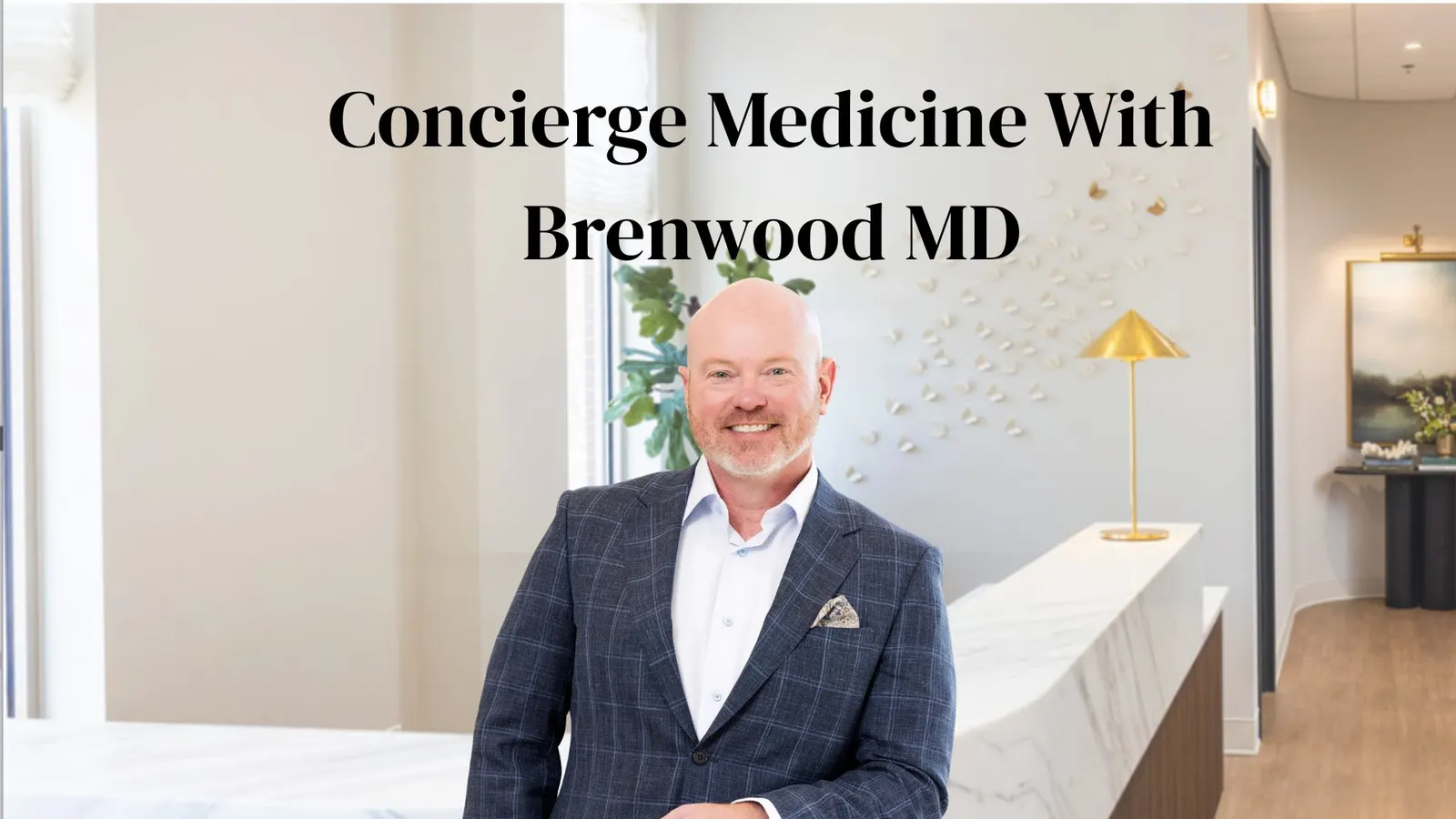

A NextMD video conversation between Josh Bobrowsky (Founder & CEO, NextMD) and Dr. Aaron Wenzel (Founder, Brentwood MD).
Recorded April 2026. Runtime: ~45 minutes.
Summary
Dr. Aaron Wenzel is a family medicine physician who spent nearly a decade as a traveling emergency room (ER) doctor in the Nashville area before founding Brentwood MD, a concierge medical practice in Brentwood, Tennessee. In this conversation, Aaron walks NextMD through the full arc of his career, from an academic underachiever who joined the Army, through medical school and family medicine residency, into a four-year detour running a medical bariatric (weight-loss) practice, and finally into concierge medicine after a patient introduced him to the model.
Aaron describes how he financed the practice with his own ER shift work plus a $180,000 line of credit, didn't take a paycheck for roughly three and a half years, and built one patient family at a time until the concierge revenue could replace his ER income in 2021. He walks through the structural reasons concierge medicine produces a different patient experience. The biggest reason is that a smaller patient panel (the number of patients a doctor is responsible for) creates real time, and time creates trust.
He also describes Brentwood MD's access model. Members have direct text access to him, plus a HIPAA-compliant team messaging line that is monitored by multiple care coordinators, so a member can expect a response within minutes during business hours. He gives a real example from the morning of the recording. A worried patient texted him at 8:30 PM about a specialist consult, and within 12 hours Aaron had spoken to the specialist directly and was setting up a personal call to walk the patient through the findings.
For physicians considering the model, Aaron's advice is direct. The single highest-leverage decision is what you want to do with insurance, because every downstream decision flows from that answer. Brentwood MD has formally opted out of Medicare and accepts no insurance at all, which Aaron believes is the only way to fully align the practice's incentives with the patient's.
Brentwood MD is hiring. Aaron expects to add a physician roughly every 12 to 18 months for the foreseeable future, plus nurses and support staff. Career inquiries go through brentwoodmd.com.
Key Takeaways
The two paths into concierge medicine. Either convert an existing patient panel (faster cash flow, lower upside) or build from zero (harder, slower, higher ceiling). Aaron took the harder path.
Capital required to start from zero. For Aaron 10 years ago the cost was roughly $180K Small Business Administration (SBA) line of credit plus ER shift income to cashflow the business. Most of the loan went to physical office build-out. Aaron believes a beautiful physical space is part of the value proposition, even for members who rarely visit. These numbers on an inflation-adjusted basis would likely be close to $500k between buildout and salary.
Time to profitability. First-year revenue was about $200K to $300K. It took about 18 months to cover his first hire, rent, and debt service. Aaron didn't take a paycheck for about 3.5 years.
Conversion economics by model. A traditional practice can typically convert 15 to 20 percent of its existing patients into a Direct Primary Care (DPC) membership, the lowest-friction conversion. A high-end concierge conversion is much harder unless the practice already serves a high-net-worth clientele. Building a concierge practice from the ground up is often easier than converting one.
The math of patient panel size. A traditional primary care doctor with 2,000 patients has roughly 15 minutes of attention per patient per quarter. A concierge doctor with 200 patients has roughly 2.5 hours per patient per quarter, a 10x difference in available attention.
Documentation overhead is invisible. In an insurance-based practice, 40 hours of patient-care work typically generates another 50 percent in documentation time, pushing the workweek to about 60 hours. Concierge practices can compress documentation because they aren't documenting for third-party payers.
The single most important question for any physician considering the model: What are you going to do with insurance? Every downstream decision (price, panel size, marketing, who your patients will be in five years) flows from that one answer.
Why Brentwood MD opted out of Medicare entirely. Aaron wanted no stakeholders in the doctor-patient relationship whose goals weren't aligned with the patient's.
Access is more than your doctor, it's your doctor's network. The compounding value of a concierge practice is that members get fast, warm-handoff access to every specialist their doctor trusts. Aaron's example: a member's worried text at 8:30 PM led to a doctor-to-doctor specialist call within 12 hours and a same-day reassurance plan.
The hardest part of building the practice was loneliness. Entrepreneurship doesn't come with the peer group, the immediate feedback loop, or the rule book that traditional employment provides. Aaron names this as the single most underestimated cost.
Brentwood MD is hiring. Roughly one new physician every 12 to 18 months, plus nurses, phlebotomists, and office support. Apply at brentwoodmd.com/careers.
Aaron offers mentorship. He'll take a first call with any physician considering the model. Second calls are reserved for people who acted on the first one.
Why this conversation matters for patients
Most people have never met a concierge doctor in person, and the category is often described in terms of price (about $11,000 per year at Brentwood MD) rather than what that price actually buys. Aaron's framing is the cleanest we've heard: the price is buying time, and time is what makes every other part of medicine work better. When your doctor has time to know you, they make better decisions. When your doctor has time to call a specialist on your behalf, you get answers in 12 hours instead of three weeks. When your doctor has time to think about you between visits, your chronic conditions get managed before they become acute ones.
If you're evaluating whether a concierge practice is right for you or your family, this interview is one of the clearest first-person explanations of the model we've published.
Why this conversation matters for physicians
If you're a primary care physician (Doctor of Medicine, or MD; Doctor of Osteopathic Medicine, or DO; Nurse Practitioner, or NP; or Physician Assistant, or PA) and you've felt the friction Aaron describes, this conversation is a roadmap. He's candid about the capital, the years without a paycheck, the loneliness, and the moment the practice "started paying for itself." He's also candid about the upside: he calls himself "the happiest doctor I know."
Note: NextMD's directory only lists practices with at least one MD or DO physician. Aaron's mentorship offer is open to providers across the primary care spectrum.
About Brentwood MD
Practice | |
Location | Brentwood, Tennessee (Nashville metro / Williamson County) |
Founder | Dr. Aaron Wenzel |
Model | Concierge medicine, no insurance accepted, formally opted out of Medicare |
Membership fee | About $11,000 per member per year |
Doctors | 3 |
Specialty | Family Medicine |
Hiring | Yes. Physicians, nurses, phlebotomists, office support |
Website |
Brentwood MD is one of the highest-priced and most established concierge practices in the Nashville metro area. For broader context on the Nashville concierge market, see our 2026 Nashville industry report.
About Dr. Aaron Wenzel
Aaron grew up in Southern California, served in the U.S. Army, completed undergraduate work and medical school after the military, and trained in family medicine in Jackson, Tennessee, outside of Memphis. He spent about 8 years as a full-time emergency room physician in the Nashville area, ran a medical bariatric (weight-loss) practice for about 4 years, founded Brentwood MD around 2017, and transitioned out of the ER full-time in 2021 once concierge revenue could support his family.
Frequently Asked Questions
What is concierge medicine?
Concierge medicine is a membership-based model where patients pay a recurring fee, typically $3,000 to $25,000 per year, for direct, unhurried access to a primary care doctor with a small patient panel. Most concierge practices accept no insurance for primary care services. The patient pays the membership; the doctor delivers an elevated standard of access, time, and coordination.
How is concierge medicine different from Direct Primary Care (DPC)?
Direct Primary Care is a closely related membership model, usually priced lower (about $60 to $250 per month) with a slightly larger patient panel (typically under 800 patients per doctor versus under 300 for concierge). DPC is a great entry point into membership-based care; concierge tends to sit at the higher end of access, time, and coordination. See our full concierge vs. DPC comparison.
How much does Brentwood MD cost?
Membership at Brentwood MD is approximately $11,000 per member per year. Pricing across the U.S. concierge market ranges from about $3,000 per year for entry-level concierge to $25,000 or more per year for ultra-premium practices like MD2.
Does Brentwood MD accept insurance or Medicare?
No. Brentwood MD does not accept commercial insurance and has formally opted out of Medicare. Members typically maintain a separate insurance policy for hospitalizations, specialists, imaging, labs, and prescriptions outside of what's included in the membership.
How fast can I reach my doctor at a concierge practice like Brentwood MD?
At Brentwood MD specifically, members have direct text access to their physician and to a HIPAA-compliant team messaging line monitored by multiple care coordinators. Aaron describes typical response times as "one or two minutes" and says it would be "unheard of" to wait longer than an hour. By contrast, the average wait for a new primary care appointment in many U.S. metros is 10 to 20 days.
Is Brentwood MD hiring?
Yes. Aaron expects to hire one new physician every 12 to 18 months for the foreseeable future, plus nursing and support staff. Career inquiries go through brentwoodmd.com.
I'm a physician thinking about starting a concierge practice. Will Aaron talk to me?
Aaron offers a first call to physicians considering the model. He extends second and ongoing conversations to physicians who act on what was discussed. Reach out via brentwoodmd.com.
Full Transcript
Lightly edited for readability. Timestamps are from the original recording.
Origin Story: From the Army to Family Medicine
Josh Bobrowsky (00:04): Great, let's see if this works. I'm here with Dr. Aaron Wenzel, founder of Brentwood MD. He's somebody who I've known for several years and a personal friend. Aaron, I'd love for you to introduce yourself, tell your story. I'd love to hear about how you got into both medicine and then made the transition from traditional medicine into concierge.
Aaron Wenzel (00:27): Thanks Josh. Happy to be here, always happy to have conversations with you and certainly always happy to share my story. So I kind of took the road less traveled into medicine, grew up in Southern California, was an academic underachiever, which led me to the military, the Army, and then after the Army with a little bit of college money and a new focus on life, rallied and got myself into undergrad then med school.
I did family medicine training outside of Memphis, Tennessee in Jackson with the idea that I wanted to be a primary care doctor. I wanted to make a difference. I almost walked away from medicine in my second year of residency because the model that I was practicing in revealed to me that virtually none of my patient experiences were where patients got better. And it really dawned on me that we have a sick care model. And what I was really hoping to participate in is more health care.
And on the side, during training, I was doing some moonlighting in the emergency room, developed another skill set. And so once residency was completed, I moved to the Nashville area and started working full time as a traveling emergency room doc with entrepreneurial kind of tendencies that at some point I knew I would want to lean into but didn't know what that looked like. Fast forward about eight or nine years of doing ER full time, I came across the concierge model and really couldn't believe that it was real.
Discovering the Concierge Model
Josh Bobrowsky (02:11): So let's, let's back up here just for a second. How did you come across this concierge model? And kind of tell me like a little bit of the contrast of, you know, when I'm thinking about it, I think of ER being like this fast paced, incredibly high volume, very limited patient interaction. You see them one time and ideally probably never see them again or rarely see them again, depending on rotation. Tell me about kind of one, how you heard about Concierge Medicine and two, what made you decide to kind of almost go polar opposite end of the spectrum from ER, see somebody once and never again to build these deep relationships in a Concierge model.
Aaron Wenzel (02:50): Yeah, no, I appreciate the clarifying question. I jumped over my very first entrepreneurial journey, which was medical bariatrics. My first revelation in trying to lean into this, I want to build something that has a meaningful impact positively in someone's life, was rooted in this realization that the only people I had ever noticed that improved their health were somehow able to lose weight and keep it off, specifically lose excess body fat. So I became really obsessed with the fat cell, you know, why do we have it? What would make it grow? What would make somebody be able to shrink it, what would be some of the explainable causes that you couldn't shrink it. And so I became obsessed with the biochemistry really of obesity and by extension metabolic disease.
And it was in that experience of about four years of running a medical bariatric practice that I met someone who introduced the idea to me saying, you know, we really love you as one of our doctors, but we would love even more if you would be our doctor. And then they went on to tell me that they had a concierge doctor in Washington, DC. They had an internal medicine doctor who converted her practice and that they loved it. It was just such an amazing thing. And when they moved to Nashville, they were looking and they couldn't find anything. And I was like, well, what's concierge medicine? I had no idea what that was. I had not ever heard of it outside of maybe like a TV show or something.
And when they explained it to me, it kind of piqued my curiosity and I leaned into kind of studying it and like, my gosh, this is real. And like, there may not be one in my town, but they're kind of everywhere in other big towns. And this feels like a model that I could really thrive in. All the while, I was still doing the emergency room, trying to get my entrepreneurial feet under me and become a businessman, which was something I had never really done.
Aaron Wenzel (04:58): And so once I'd spent about two years from the point of I was introduced to the idea, kind of contemplating what that would mean for me if I was to build something like that. In the interim, I switched from a traveling ER guy to a medical director of a facility because I really wanted control of the schedule. And with this concierge model where you have access, it was really important to me to be able to get most of my working hours during the business week available. So that meant a lot of nights and weekends, because I still had to provide for my family. And so I think it was such a compelling idea and something I really identified with that it was worth at that point really going all in and kind of burning the boats, as they say, to build this out.
And so while in the emergency department, I built out the practice and that gentleman who introduced the idea to me, he and his family was my very first family as paying members and then one by one by one. And then I did that for about four years while running the department. And then there was enough momentum on the concierge side for me to walk away from the ER full time around 2021.
Starting From Zero: Capital, the SBA Loan, and 3.5 Years Without a Paycheck
Josh Bobrowsky (06:19): That's awesome. Let's kind of take a little bit on the entrepreneurial side and talk about that. And then if it's okay with you, I'd love to talk about kind of the medical side because there's two things you've really developed unique expertise in. One is the concierge medicine, one of the most successful practices in the country, and the other is kind of the entrepreneurial side of things, both the care and the business side of things. On the business side of things, what did it take for you to get started? How much capital, how much of your time, what was the first year like as starting your own practice?
Aaron Wenzel (06:55): Yeah, I took a path that in my experience is only one of two paths that one can take. I mean, you either start from the ground up with nothing or you have an existing patient population and you convert it and a certain percentage of them convert with you and you immediately have some cash flow. My route is the hardest, you know, building from nothing. But it was something that was worth it to do. So the capital was provided by me and my working in the ER. So it was a real investment of my time and effort in exchange for shift work to stabilize my family, but also cashflow the business. I mean, there was a small business loan in the very, very beginning, maybe $200,000. The majority of that was for build out because I had this conviction that I needed a beautiful physical space and the value of the presence of that space and for a place for people to go. Even though I knew some people wouldn't ever kind of visit the office much, I saw that there was value in having that physical space. So it was cash flow plus about a $180,000 line of credit on the very, very beginning.
Josh Bobrowsky (08:19): Did you get that from a bank or from the building or where did you get the initial $280[K]?
Aaron Wenzel (08:22): Yeah, no, I got it from my bank, just an SBA loan. And it's funny, I remember the experience was like, I don't know if anybody's had experience with SBA loans, but on one hand, it's really great because there's money available, but it's a process. And I remember going through the process thinking I just probably would have worked a few extra shifts and gone through this process. But nonetheless, I took the loan and then paid it off.
Yeah, and I think our first year of revenue, I'd have to look at the numbers. I think we did about $200,000 or $300,000 in revenue.
Josh Bobrowsky (09:04): [That's] pretty amazing because that's almost all profit for you, I would assume. I mean, you're the doctor, you're paying your rent, but outside of that, I would assume you're probably breaking even.
Aaron Wenzel (09:12): Well, yeah, I had the rent. It took about... I remember, because I had one staff member who was a nurse, who was a dear. She's still with me. She was my first kind of significant hire, and she's really been the backbone. And she was basically running the office, answering the phone, always there when I was in the emergency room, working as an extension for me and really allowed me to do both and manage both at the same time. I think it probably took about 18 months to pay for her and pay for the rent and pay for the servicing of the debt and kind of all of the things. Of course, spending money on marketing, I'm trying to figure out, I still have a lot of things I'm trying to learn, which in the beginning you spend a lot of money to learn.
But I didn't take a paycheck. I didn't take a paycheck for, I'd have to look at the math, probably three years, three and a half years. I was very, very intentional that I didn't want to create any drag on our cash flow because the ER, like the big milestone for me was the business is paying for itself. That was like breathing a whole nother layer of oxygen because I had the ER to provide for me and my family and I felt protective of that cash flow as we were building.
Aaron Wenzel (10:44): And then I remember when I got my first paycheck, Jen, her name is Jen, she was like, "you need to take a check." And it was like the first time. We had a picture of it, it was pretty cool. And I think all entrepreneurs at some point, you know, whether you pay yourself out of working capital in the beginning, or you wait until you're profitable before you take a paycheck, there is something about that, "this business is real and it's paying for itself. And like, this is truly out of the overflow. This is not hurting the business at all to take proceeds out." But it took about three and a half years for us.
Conversion Math: Why Building From Zero Was Easier
Josh Bobrowsky (11:15): So what do you think, one of the things that I see, and I've been kind of talking with a lot of different doctors, concierge, direct primary care, and just kind of going through the data. It seems to me that if you currently have a practice, you can convert about 15 to 20 percent roughly into a direct primary care function. And you know, if you're going from free to call it 150, 200 bucks a month, I think it's probably a lot harder to convert a traditional practice to a high end concierge.
I actually think that you're probably best kind of going ground up the way that you did it. But if you're going to go DPC or direct primary care, it seems much more logical for a doctor to go from a traditional practice. You've got two or 3,000 patients under care and you're going to convert those to four to 600 of actual paying direct primary care. But I don't think it's that easy to shift from a standard direct primary care to a concierge unless you have kind of a really high end clientele naturally. Like, you know, if you're based out of New York or based out of San Francisco, that's probably an easier convert. But for kind of middle city like Nashville, where you're based, I think it'd be a little bit more challenging unless you really had that clientele under management just to start with. I mean, that's at least my hypothesis.
Aaron Wenzel (12:35): Yeah, I hear you. I think you're right. I think I'm sure the data would support that. I haven't seen it and I haven't studied it. And my only experience was just starting from ground zero. But it does seem like in order of diminishing friction, would be like, you know, a high end offering would be kind of the least conversion. A hybrid model where there's some insurance with a very, very low annual retainer would probably be the next easiest. Just from the psychology of, at least I can use it a little bit, I'm not taking it at all. Even if it was the same membership fee, I do feel like, you know, whether that's two, three grand a year, plus or minus insurance, I think if you do two, three grand a year plus insurance, you probably have a higher conversion. You're also still beholden to insurance.
The Single Most Important Question: What to Do With Insurance
Aaron Wenzel (continued): And so I always tell people, because I end up getting a lot of doctors who are considering the model, you know, "help me think about this." I always say, in my opinion, the number one question a doctor has got to answer for themselves is what are we going to do with insurance? Are we going to take it or are we not? And even though it's probably the hardest question to answer, I think it's the highest yield question to answer because so many decisions downstream will be based on where are your revenue sources coming from and then how do you message that, how do you kind of communicate that to your people, and what kind of environment five years from now do you want to be practicing in. And I think it's important for folks to think that through.
And I don't know that there's a right or wrong answer. I think there's a right or wrong answer for the individual. For me, it was very clear when I went through that exercise. I don't want anything to do with insurance.
Aaron Wenzel (14:34): Mostly because they don't have my goals in mind, they don't have my values in mind, and they certainly don't have consistently patient values and goals in mind. And I just didn't want to be in an environment where there were stakeholders in that relationship that didn't have the same goals. It just felt like a lot of inherent friction that would be caused.
Josh Bobrowsky (14:57): Yeah, I think that makes a lot of sense because when I think about it from my perspective, you have pretty much full control over the experience with your customers today and you're outside of the insurance game, right? So you guys aren't, you never touch insurance at Brentwood MD, is that correct?
Aaron Wenzel (15:14): Yeah, including Medicare. We've actually opted out of Medicare formally, so we can't take Medicare. It's not that we don't. We said we will not take it.
Josh Bobrowsky (15:25): And so that allows you to control the experience, which if you think about things from just an operational standpoint, it makes sense where you get to control experience start to finish rather than having all these intermediaries in play that have probably misaligned or maybe not perfectly aligned interests. I think that makes a lot of sense. And I kind of want to transition from here to the next thing. With alignment of interests, I think a lot of people that I speak to are just for the first time hearing about concierge medicine. They're just for the first time hearing about direct primary care. The biggest thing that I'm kind of getting is two questions and I'll just ask the first one, one at a time. One is what exactly differentiates coming into Brentwood MD versus going to your standard insurance primary care physician. Can you walk me through a little bit of what a patient should expect from you versus what they're going to get in their standard primary care?
Patient Panel Size and the Math of Attention
Aaron Wenzel (16:27): Yeah, I mean I think I spend a lot of time thinking about this, Josh, and there's a long list of things that are differentiators but I think, if I really use my brain to distill it down to the essence of the variables that really drive the majority of different experience, I think it's patient panel size is probably the number one contributor to the different experiences, because ultimately patient panel size will drive time.
Aaron Wenzel (17:08): The more time a health-conscious person has with a talented doctor over a long enough period of time, the quality of thinking, the quality of decision making, and the quality of experience tends to be much more elevated. And obviously that isn't for everyone, because not everybody would prioritize that. If somebody is just looking for the cheapest path to basic care, the concierge model may not be a good fit for them. But if somebody really values access, trust, and relationship that grows longitudinally, and the ability to have access to somebody who knows you personally and has relational context, the amount of precision and quality of thinking and decision making will improve over time. And I think that is really attractive to our ideal kind of members. And I understand that that isn't for everybody, because not everybody prioritizes that. But I think the first unlock is you've got to give the doctor and the patient time. And if you're too [busy]...
Josh Bobrowsky (18:19): So go from time, I like to kind of quantify things and think about things in like a mathematical perspective. If I'm thinking about keeping numbers super rough or like round and very even for your average person to understand, let's assume that your average doctor is going to put in 2,000 hours a year of work throughout the year. And that's going to be their timeframe allocated to patients. So if we make this assumption, I think, you know, rough math, that's 40 hours a week times 50 weeks, right, that's how we get to that math, just for real simplicity.
Josh Bobrowsky (18:49): If your average doctor has 2,000 patients that means they can allocate one hour per year per patient. And you break that down on a quarterly basis and you're thinking about you're going to allocate 15 minutes of time to each patient per quarter. That's almost nothing. That's really challenging to balance in your head. And you contrast that with your practice and we'll say that your practice holds a maximum, give or take, of 200 patients. All of a sudden you have 10 hours per patient per year. You're thinking about your patient (except for 15 minutes) for two and a half hours a quarter or almost an hour a month of dedicated time. That's a complete flip when you think about the level of care that you could receive on a mathematical basis of you actually know your patients.
The Hidden Documentation Tax
Aaron Wenzel (19:45): Yeah, it's area under the curve, right? I mean, I think what also needs to be in this math kind of thinking exercise is that that's a 40-hour week of just patient care. In a model where you are beholden to third-party payers, you have to document and create. There's a lot of documentation time that goes beyond patient care. I would argue, even in my model, we have that kind of math for thoughtful patient-specific care. If I did 40 hours a week of patient-related care thinking time, I still have to allocate some time for documentation. But we have the ability to really leverage speed and efficiency in how we document.
But when you're in a system where it's just fraught with inefficiencies, I mean, a doctor with 40 hours of patient care, there's probably another 50 percent more time spent in documenting. So these 40-hour patient-care weeks really come into 60-hour work weeks, which is not uncommon. And when reimbursements continue to go down and the amount of work to document goes up, it's kind of this functionally bankrupt kind of equation where the only lever you can pull on is be faster so you can see more people or be faster so that you can get through the day and have something left to give to your family.
But yeah, practically what ends up happening is that people come into our world and it is not uncommon for people to say after their very first visit, "I have never had this much time and attention of a doctor before." You know, maybe we're sitting there two, three hours, just getting to know each other, getting their history, spending time together. They're learning me, I'm learning them. And what ends up happening is deeply human and it [builds] trust.
Aaron Wenzel (21:52): [Trust] is kind of the bedrock of any meaningful human relationship, in my opinion. And trust requires time spent, and you can't kind of rush the trust. And we honor that need for time. Patients become, start looking a lot like friends, start looking a lot like family, because we really know the nuances. We understand what they're afraid of. We understand what they want to achieve. We're comprehensively exploring. We have space for curiosity.
One of the things that really is an advantage of this model where we have a lot of time baked in is, I've been thinking a lot about this recently and you and I haven't talked about this offline, but I do think about, there's such a surge in the wellness, longevity, kind of biohacking. People are wildly curious. There's a lot of attention going on and there's a lot of noise. Like, how do you find signal in all of that? And you certainly aren't going to have space in a traditional high-volume practice to say, "Doc, help me think through this. Is this for me? Is it not for me? What am I not thinking about?" There's just no room for that.
And so I think time is the great differentiator between a membership-based model and an insurance-based model. And I think the number one contributor to your time equation is the patient panel size.
How Patients Actually Reach Their Doctor at Brentwood MD
Josh Bobrowsky (23:29): Yeah, as I think about this from my perspective, in a traditional care model, you've said this a lot of times, it's more sick care than it is healthcare. If I have a traditional primary care provider (PCP), I go to them when I am sick, but for me being sick, I do not kind of reach out to them when I reach out to them. It's almost a very specific manner of "hey, I'm sick with A, B and C. Can you take care of me?" If you can't, then I go to an urgent care. Then I go to an ER. There's this obvious expansion in these urgent care models, which I actually think come from the fact that you can't easily get in touch with most of your PCPs.
And even if you go to the doctor, you're often not even seeing the doctor, you're seeing the nurse's assistant, you're seeing the physician assistant. You may not even get to interact with the doctor. And this is also true of these urgent cares. You go to an urgent care and it's pretty rare you get seen by a doctor, if at all. And so the ability to have access to your doctor not just when you're sick but also to ensure you're not getting sick, but from that, can you talk a little bit about kind of how people have access to you? If I'm one of your patients, do I call the nurse, do I text you? How does, if I'm your patient, how do I get in touch with you if I need something?
Aaron Wenzel (25:00): Yeah, it's a good question and it's a fair question both from a patient standpoint and a physician who's considering the model because it's one of the big things, like, wait a minute, everyone has direct access to you, how does that work? Like, how do you ever have boundaries? And there's math and science to it and obviously expectations and boundaries and you have to like, whatever your style is. But if Josh is my patient and he has a need, Josh has full permission to text me 24 hours a day. You can call me anytime. You can text me anytime. However, I do sleep. And when I'm sleeping, I wouldn't expect someone to call me if they're having an emergency. I tell them in advance, "Josh, if you're having an emergency, don't call me. Call EMS [Emergency Medical Services]. You can text me and then as soon as I wake up, [I'll respond], but don't wait for me for your emergency."
If there's some time-sensitive thing you have the ability to contact us, but we have a messaging platform for our members. It's kind of like a Slack, you know, our member-only HIPAA-compliant messaging platform, where instead of being beholden to "Aaron Wenzel seeing this thing when he's asleep, that's unreliable," we have a tool where Josh could send in and you can alert it that it's urgent and it'll page me. And then I have a mechanism to wake me up because I'm being paged.
I take care of a lot of people who travel all over the world. They're on different time zones. They're successful entrepreneurs. Oftentimes their most productive hours are 11 PM to 1 AM. And I'm asleep. I'm an old man. I'm up super early. I go to bed super early. I'm very disciplined around that.
Aaron Wenzel (26:50): But if you have something, "I need that med refill or that thing," you may be just catching up on your to-do list and you don't expect me to respond. You're just getting it off your to-do list. Yeah, text me. That's fine. So we have found it is better to have many eyes on one channel than having one set of individual sets of eyes on many channels. And so we have this messaging platform where literally me, my care coordinator (which is a nurse), all the other care coordinators that work for the other doctors, we have a triaging system where it would be very unlikely if you messaged our, we call it the "care text line," if you messaged the care text line that you wouldn't get a response within one or two minutes. It would be unheard of to not get a response within an hour.
Josh Bobrowsky (27:48): Which is crazy because, as you know, I'm building out this platform NextMD. This is where this blog's going to be featured and I'm going through the data. I mean, there are some states where you're waiting 10, 15, 20 days on average to see your primary care doctor. I was just talking with a friend out of New York and he was saying that his wife got sick and they said that they could see her in two to three weeks. And he was just like, "this is in two or three weeks. What use is that?"
Aaron Wenzel (28:17): "But I'm sick today."
The Network Effect: Access to Your Doctor's Specialists
Josh Bobrowsky (28:24): This also brings me into a question, to one of the things that I see as a really strong value proposition for the concierge model that you and I have spoken with offline. It's not just the amount of hours you have, but if I have a chronic illness, something that's challenging to deal with, you as my primary care doctor, even though you may not be a specialist in that category, am I accurate that you can help assist with recommending me specialists, or you've relationships with specialists, or you used to work at the hospital and you've, tell me how that works. If somebody has a chronic condition and they come to you, what is the value proposition there?
Aaron Wenzel (29:10): I mean, real life scenario, literally as I was sitting down here before loading up to have this conversation, I was coordinating between a member of mine who texted me last night at 8:30 and said, "hey, I just talked to Dr. So-and-so about some recent testing we had done. I'm pretty concerned. Let's circle up to talk about it when you get a chance." And I texted him back and I said, "no problem, I'm going to do that. I'll connect with him tomorrow and then I'll coordinate." Well, it just so happened I reached out to the doctor this morning and I was like, "hey, let me know when you have five, ten minutes. Patient's kind of nervous, just want to walk through your point of view."
He texts me back, he's like, "yeah, you free now?" So I hop on the call, five, seven minutes, and I have the total download of what the latest is from the consult note. And I texted my patient and I said, "hey, I'm about to hop on a meeting real quick, but can I call you when I'm done? I spoke with the guy you spoke with last night. We're all on the same page and I'll help you walk through this." I just think it's a real great example of like having an advocate.
I know the specialist well, I know he's a great practitioner. I know he's very, very good at his craft. I also have communicated with him hundreds of times, so I understand his communication style, I understand the messaging, and I have access to him, so it's just a network effect. Ultimately, the net result is my patient, within literally 12 hours of reaching out to his person (me), we are now setting up a follow-up discussion where I've already confirmed with a specialist, coordinated all of these things to give a deeply personal, bespoke response to something that is troubling him for an issue that he's afraid of. And it's just not [possible elsewhere]. You just can't, how did that happen? I have time.
Josh Bobrowsky (31:19): Well, it's not just time. I think that you're also realizing part of your value proposition is connecting with these other people. If I'm a standard primary care doctor, my goal is to get as many people through as possible. If I happen to know of somebody, maybe I'm able to spend an extra five, ten minutes, but you just think about the math, and even the scenario I gave proposes that there's an equal amount of paperwork and administrative work for both the primary care doctor in a traditional sense and a concierge. And that's not accurate. I mean, even realistically, you might be looking at less than 15 minutes of work. You might be looking at 10 minutes of work.
Josh Bobrowsky (32:10): And I think that's actually something that's like really underrated that I think a lot of people miss when it comes to concierge medicine or even direct primary care is, when you're sick, you're not going to function at the same level as you were prior to being sick. Obviously, you're sick, right? But that means you probably need assistance navigating an unfamiliar system more than any other time. Unless you have a family member that can really navigate this out with me, you're really just kind of at a little bit of luck in just where you show up and who takes care of you, versus having somebody who's kind of being thoughtful throughout the entire process of how everything looks.
Aaron Wenzel (32:53): Yeah, you bring up a great point. Yesterday I was having a meeting with somebody and I asked him, I said, he's a newer member to our practice. He's a referral to me but I'm full so we kind of brought him in and matched him up with a really great doc, and I'm just like, "hey man, how's this experience been for you?" And he was giving me some feedback about everything that he loved and I said, "if you were to distill it down into like a bumper sticker, like what would be, at this point, what's the highest value this has offered, provided for you?" And he said, "it's access, but not just to my doctor. I have a strong confidence that if I reach out to my doctor, I'm either going to get an answer or I'm one phone call away from that doctor making to get the answer."
And it provides him a lot of confidence as he goes out and builds and does his thing that either his doctor is going to know the answer or his doctor will know who to call to get the answer. And so this real network effect, so it's more than just access to your doctor, it's access to your doctor's network. And all the relationship equity I have professionally, these folks can tap into that. And it's not just mine, but my members get access to all of my other doctors' networks, which are not the same. And so there's this real compounding effect as we grow that we actually get more powerful in our ability to move thoughtfully and quickly. And I always say in your time of need, speed is the game. Speed is everything. Speed, speed, speed, speed. And so we seem to be getting faster as we grow, which excites me about the model because it just means more and more people's lives are being positively impacted.
The Best and Hardest Parts of Building a Concierge Practice
Josh Bobrowsky (34:40): No, I think that's really thoughtful to think about because part of your job is connecting people and so you build a competency in that. It isn't just this one-off thing. Mr. Jones needs an X-ray and an [orthopedist], but you've gone through 20 people and you have a really great ortho and you have a really great PT [physical therapist] that you recommend, and kind of like a full psych or oncology or whatever the need might be, you have connections within that ecosystem.
I know we're kind of heading into the tail end of the time period here, but I want to ask you as an entrepreneur and a doctor, what is the best and the worst thing about running a concierge medical practice from your perspective?
Aaron Wenzel (35:29): I mean, this is purely like a personal, the best thing for me is that I've been able to build my dream business. Something that I'm deeply, that I care deeply about, like the subject matter, like my craft, I care deeply about it. I care deeply about the people who are impacted by it. I care deeply about the team who helps me deliver it. And I am deriving kind of immeasurable satisfaction and joy from building something that I know is positively impacting the members and the care team in parallel. And it grows. And with growth comes not less impact, but more.
It's just kind of this, like, it's just a lot of fun building something that seems healthy. I liken it a lot to like this paternal, you know, similar to someone saying like, "hey, what are the things that make you proud about your sons?" Geez, I mean, here are the things that they're growing into being great young men. Like, I derive a lot of satisfaction from growing a team and seeing them thrive in their effort of caring for other people. So I think the answer to what is the best thing about it is it has allowed me to create my dream business. And in doing so, secondarily I would say I've learned something really, really important about myself that I don't think I would have ever truly understood about me. And that is I love being a businessman and I love solving problems and I love doing it in a way with teamwork and with unique ability and with the ability to solve complex things through really elegant solutions and elegant teamwork. I don't know that I would have fully appreciated that aspect about me.
Aaron Wenzel (37:27): I think, did you ask also what's the worst part about it? Yeah, I would say the hardest thing for me to solve in the first few years has been how isolating entrepreneurship can be. It's very lonely. It's a lot of work and it requires incredible focus of attention. And in the early days, I was not very good at figuring out how to keep my prioritization of my own health, my marriage, being a father, friends, hobbies.
Josh Bobrowsky (37:41): Or the hardest, yeah, worst, hardest, whatever you feel comfortable with.
Aaron Wenzel (37:57): I eventually have figured out how to kind of bring that back in and find this really nice harmony between them and not [sacrifice] at the cost of another thing, because they're all, all of those things I mentioned are essential for me. But when you burn the boats and you go all in on your business, it can become all-consuming. There's a lot of practical reasons, right? Like you don't want it to fail. But for me, it was really isolating. There were seasons where I felt really, really alone. You know, there's no, it all stops with you, starts with you, gets driven by you. And so I'd say that was the hardest part.
A Message to Other Physicians
Josh Bobrowsky (39:01): That's really logical because entrepreneurship can be incredibly challenging because you get into these ecosystems where you don't get immediate feedback in a positive manner, or you might get positive feedback, but it's not tied to you earning more money. If you take a job and you get a raise, you instantly make that much, or [you're] guaranteed that you're part of a group of people that are all at your level. You have peers, you have people that you can look up to or, you know, mentor down. And there's kind of a rule book that you come in by. And then sometimes I hear a ton with entrepreneurs is it can be very lonely. So I really do greatly appreciate that.
I want to leave a little bit of space, we probably have about five, ten more minutes left for anything that you want to share, just kind of wrapping up, closing what it means to you, anything that you think is really important, just kind of as a message about yourself, your business, anything, leave it open from your side.
Aaron Wenzel (40:00): Yeah, I think for those that would be listening that are providers, whether you're a physician, nurse practitioner, PA [Physician Assistant], nurse, and you are practicing in a way that doesn't meet a need for you that is deeply satisfying, I'd encourage you to consider this model. It's very unique and it is not for everyone, but if there's friction in your professional life in terms of satisfaction, making impact, like a "better way" kind of thing, I'm very evangelical about this model. I think there's a lot of ways to do it. I think there's a lot of entry points. I think there's a lot of structures that could work. I think there are some core elements that make the ones that succeed succeed. But I think there's a lot of ways to kind of do it.
I know a lot of physicians and I often say I'm the happiest doctor I know. I think happiness matters and I think a lot of us in the healthcare world, if we've been at it for a minute, we have to actively resist resenting how hard it is and how thankless it can be and how much of a grind and how generic it starts feeling. So if there's friction professionally, I would encourage you to seek out what practicing in this model could look like.
It doesn't mean you have to start your own thing. It might mean, hey, seek out who are the people in your market who are doing it in a way that you relate with and maybe reach out, see, are they looking to expand? Obviously, if you're entrepreneurial, maybe you should do your own thing. I think there's plenty of [room].
Hiring and Mentorship at Brentwood MD
Josh Bobrowsky (41:57): So really quick question. Actually two questions. One, are you in your practice hiring if a doctor was interested in coming on? Are you guys expanding and growing or bringing on more doctors? And the second question is, even if someone wasn't looking to directly work for you, are you open to doctors reaching out to you personally to get a feel for these things?
Aaron Wenzel (42:20): Yeah, I mean, first question is, yes, we're hiring. I think we're in a position now where we have hit a critical threshold where we will likely be looking to hire a doctor probably every 12 to 18 months in the foreseeable future, just with the market demand and our growth. By extension, that means we need more care support teams, so nurses, potentially phlebotomists, office support. Yeah, so we are definitely hiring. We have a careers page on our brentwoodmd.com. If you're interested, you could inquire there, submit a CV, just drop us a line and we'll be in touch.
And in terms of mentorship, it's something I really, I probably need better boundaries with it, but it is something that I do really enjoy mentoring and offering. I have a general rule. I'll talk to just about anybody once, but you don't get a second call unless you've acted on the things we talked about. And that's fine if you don't, it's just I'll probably be done giving. But I tend to have a deep well of willingness to give if it's meaningful to the individual and they take action on it. So if somebody has some questions, I'm generally try to make myself available at least for that first call. I'll give you a first call.
Closing Thoughts
Josh Bobrowsky (43:44): I really appreciate you taking the time to spend with me and to kind of educate me on everything on your practice and how you built it. It's been great to watch you as a friend grow your business. And I just want to say I really appreciate you taking the time to hop on this kind of [conversation].
Aaron Wenzel (43:59): Yeah man, it's mutual, Josh, I appreciate you. I mean, you're one of the smartest guys I know. I love what you're doing with this company you're building. I think it's going to fill a need for people who want to know more about this model of care and then connecting the providers with the people who are looking for the care. And I think there's magic in that to be that conduit. So I'm really excited about the platform you're building.
Josh Bobrowsky (44:31): Thanks. I'm really excited about it too. I mean, I think there's this kind of unique thing, that concierge medicine and direct primary care feel new, but they're not. Like, if you look at medicine, the history of medicine over like 2,000 plus years, for all but a small time period, most doctors had a pretty small book of people within their village, within their tribe, within their small ecosystem that they were caring for. 50, 100, 300 people. It's kind of a newer thing in the last 30 years where you've come about these doctors that are having to try and split their time across two, three thousand people.
Josh Bobrowsky (45:12): What you're doing is providing a really high quality service that's deeply needed and should be incredibly valued by people. And so I think what you're doing is great.
Aaron Wenzel (45:22): That's awesome. Thank you, Josh. Thanks for having me, and look forward to chatting again soon. Thanks, man.
Josh Bobrowsky (45:27): Sounds good.
Source
Original transcript:
01_raw/Interviews/aaron-wenzel-josh-bobrowsky-2026-04-13.txtRecorded: April 2026
Lightly edited for readability. Disfluencies removed, paragraph breaks added, acronyms defined on first use. No substantive content changed.